From rehab to therapy, Pierce County Alliance leads with empathy and respect
October 6, 2026
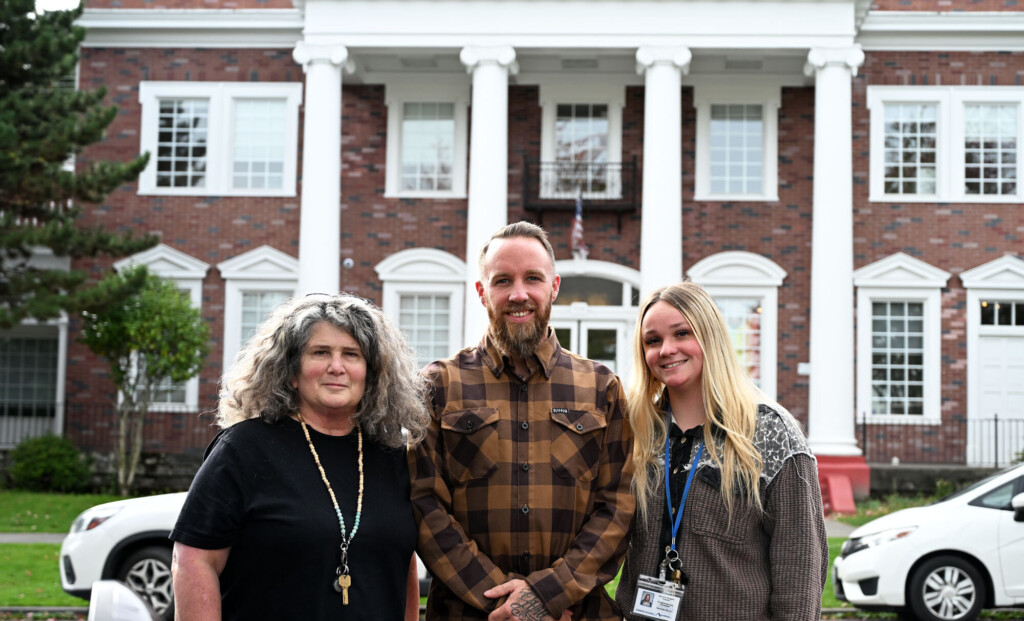
At Pierce County Alliance’s office in downtown Tacoma, client care begins at the front door. Regardless of their situation, each client is met with compassion — and a cup of coffee, says PCA community-based worker Debbie McBride (pictured left).
“Maybe they’re afraid of judgement,” she says of those who arrive with just the clothes on their backs, whether they’re unhoused or have just been released from jail. “People [seem to be] surprised that they’re just greeted by kindness here.”
That empathy is at the heart of PCA, which opened in 1972 to provide mental health and substance use disorder support for people across Washington. Today, the nonprofit social service agency also provides treatment for the Pierce County Felony Drug Court, the second-largest drug court in the state, and offers medication-assisted treatment for opioid use disorder, among other programs.
PCA is one of 28 partner organizations working within Connect Pierce, Elevate Health’s care hub that supports the vital work carried out by community-based workers and improves local health and wellness outcomes through community-based care coordination and resource navigation.
At PCA, that tailored support can look like helping someone sign up for state health insurance, getting them an ORCA card so they can commute to rehab appointments, or supplying them with new socks. While those tasks may seem easy for some, they can feel insurmountable for someone who’s fleeing domestic violence, searching for shelter each day, or otherwise struggling with their mental health.
Many clients are facing multiple health barriers, from addiction to behavioral health issues, says Samantha Moceri (pictured right, next to collegue Ryan Gilpin), who’s been a PCA community-based worker since March 2025.
“I’ve had clients come in – veterans, University of Washington students, people from all different places in life,” she says. “They’re people doing their best to get by and manage incredibly challenging situations.”
Moceri works with McBride on PCA’s reentry team to help clients acclimate to life after incarceration.
“Leaving jail or prison doesn’t automatically change their circumstances,” she says of her team’s clients. “Many of them are released without stable housing, employment, sometimes not even an ID. Without support, it’s incredibly difficult to start again.”
To help their clients do that, PCA workers make the effort to listen because “sometimes they’re not used to being heard by someone else,” says McBride.
“I have this saying: 'I have to put my pen down and take my glasses off,'” she says. “I have to sit and listen and see who they are as a person. I want my clients to know I hear them and that we're a team.”
This work feels personal for McBride and Moceri who each described growing up having parents dealing with substance abuse issues. For both women, their work at PCA challenges them to meet clients where they’re at, including if they relapse, blow off appointments, or drop off their radar.
“We understand everyone’s journey is different” and not every client is ready to do the work, Moceri says.
A recent client interaction is emblematic of that for McBride.
After four months of work helping a single mom and her daughter settle into a new apartment this past spring, McBride says the client suddenly stopped responding to her calls and emails. Despite the radio silence, she continued reaching out over the next two months. One morning in late July, the mom finally returned McBride’s call. By the end of their conversation, they scheduled her a mental health appointment, enrolled her in PCA’s reentry program, and made plans to work on her resume together.
“She just got completely overwhelmed,” McBride said. “Being able to bring her back, to listen to her and acknowledge that she's had a really difficult time and help her look at the good stuff? It was an hour of my day, but it’s so much more than that for her.”
“I told her 'I wasn't going to give up on you,'” she says. “And she goes, 'I'm so glad you didn't.'”
Ana Sofia Knauf is a freelance writer who has served as an editor and reporter at The Seattle Times, Cascade PBS, The Stranger, and other Seattle-based media outlets.